
Professional Event Lighting for a Private Estate: What It Actually Costs
What Professional Event Lighting Actually Costs
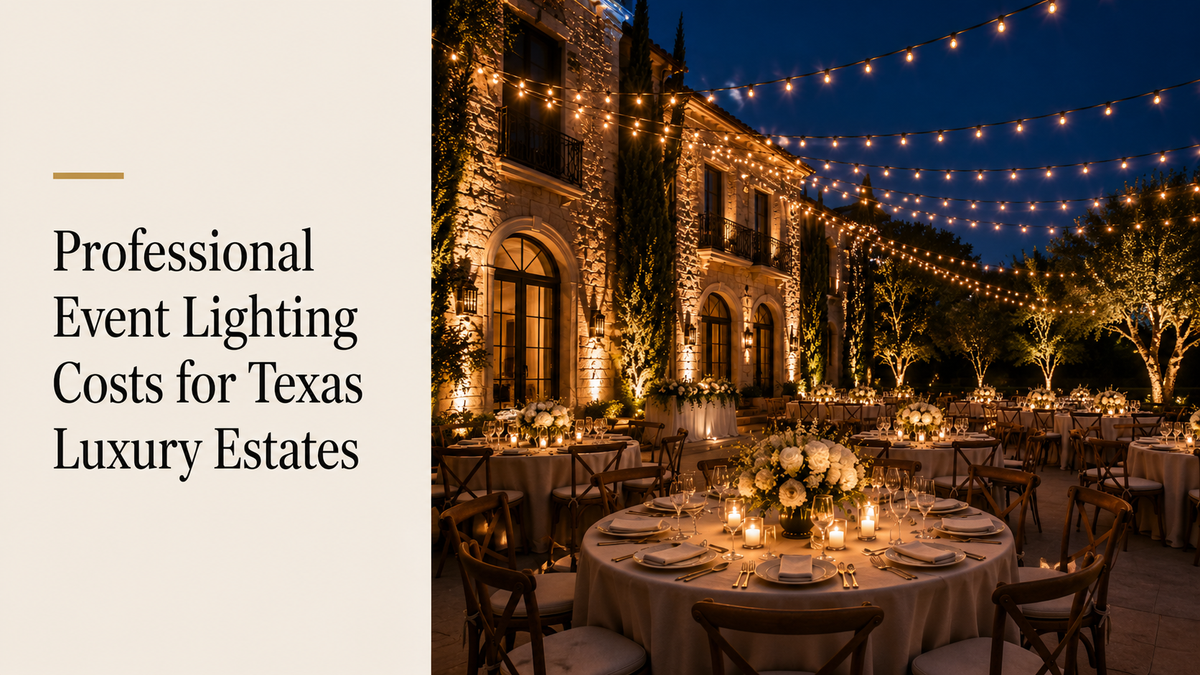
For a private estate, professional event lighting for a single occasion, a wedding, a charity gala, a milestone birthday, typically runs $3,000 to $12,000. Where a specific event falls in that range depends mainly on guest count, the areas being lit (ceremony space, reception, pool or patio), and how much of the property's architecture the design incorporates versus temporary string lighting alone.
Weddings tend to sit at the higher end of that range, since they typically involve more distinct zones, a ceremony area, a reception space, sometimes a dance floor, each needing its own design treatment rather than one uniform look across the property.
The Real Cost Is Usually Spread Across Several Vendors
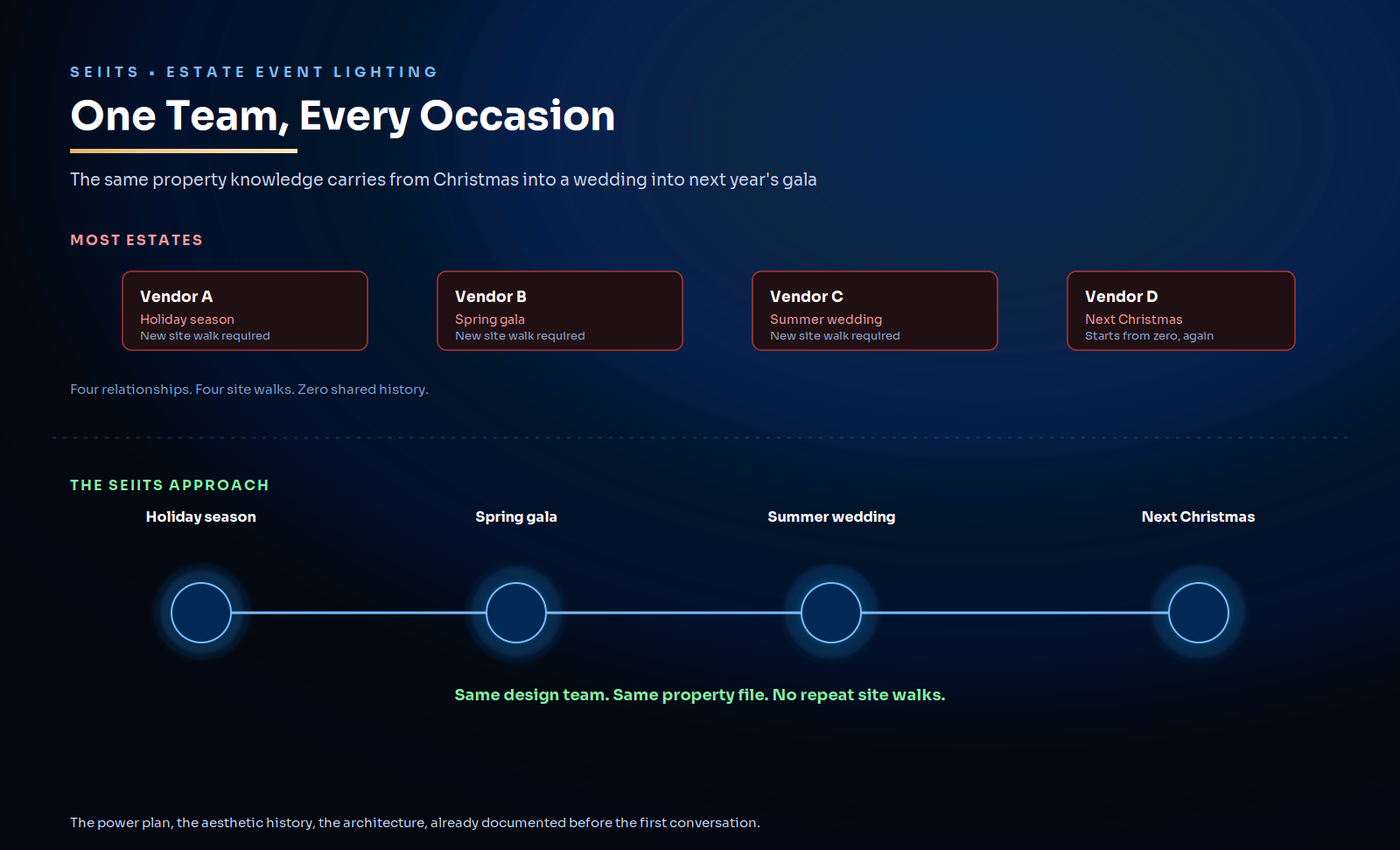
Most estates that host more than one lighting occasion a year end up with a different vendor for each: a seasonal lighting company for the holidays, a separate event lighting company for a wedding, sometimes a third for a summer gala. Each relationship starts over. A new vendor means a new site walk, a new explanation of where power access exists, what the landscaping budget was, which architectural features are worth highlighting.
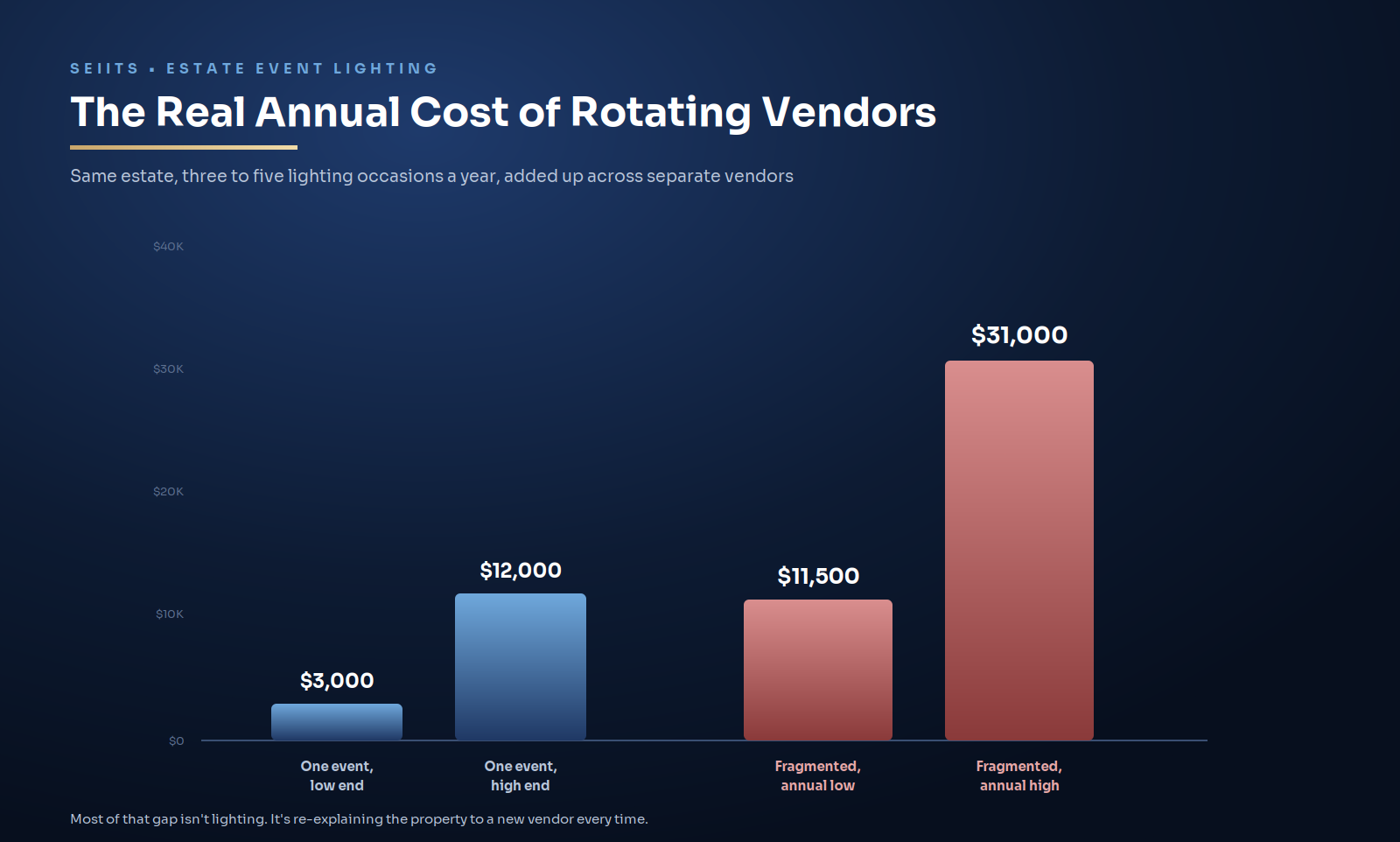
Estates hosting three to five lighting occasions a year, a holiday season plus a couple of events, commonly spend $11,500 to $31,000 annually once every vendor's invoice is added up. That total isn't unusual. What's easy to miss is how much of it is really paying for the same site knowledge to be rebuilt from scratch each time.
Why One Partner Changes the Math, Not Just the Price
The alternative to rotating vendors isn't necessarily a cheaper one. It's a single team that already has the property's design history on file, the same aesthetic language used at Christmas carries into a wedding, the same power distribution plan gets reused rather than re-mapped, and nobody needs a fresh site walk before a summer gala three weeks after a holiday install came down.
This also removes a specific coordination cost that rarely shows up on an invoice: the hours spent explaining the same property details to a new vendor every time an event comes up. For a family hosting several occasions a year, that adds up to real time, not just money.
|
Planning
a wedding, gala, or milestone celebration at home? SEIITS handles both
seasonal and one-time event lighting with the same design team, so the
property's aesthetic and power access are already documented before the first
conversation. Book a free Home Technology Assessment at seiits.com/assessment. |
What Actually Goes Into the Design
A ceremony area and a reception space usually call for different treatments. Ceremony lighting tends toward focused, directional accents, an aisle, an arch, a focal backdrop, while reception lighting spreads wider: overhead string lighting across a dinner or dance area, uplighting on trees or architectural features, pathway lighting guiding guests safely between zones after dark.
Power distribution is the detail that gets underestimated most often. A property built for normal household use rarely has enough accessible outlets for a full lighting plan plus catering equipment and a band or DJ running at the same time. Planning that load in advance avoids the last-minute generator scramble that shows up in almost every DIY backyard wedding account.
How This Differs From Seasonal Holiday Lighting
Seasonal lighting is planned around a fixed calendar, install in mid-November, remove in early January, with a design that repeats with small variations year to year. Event lighting is planned around a single date, often with a completely different aesthetic than whatever's normally on the property, and it needs to be fully installed and struck within a much tighter window around the event itself.
Both draw on the same underlying skill set, understanding a property's architecture and power access well enough to design around it, which is exactly why a single provider handling both tends to move faster on the event side: the site knowledge already exists before the wedding date is even set.
How SEIITS Approaches Estate Event Lighting
Event and seasonal lighting are both part of the SEIITS Holiday & Event Lighting service, using the same design team and the same property records across every occasion rather than starting fresh with a new vendor each time.
For estates that also run smart home automation, the design can tie into existing scenes and controls; see the SEIITS guide to smart home automation integration for Texas luxury estates for how that fits together. Pool and patio areas used for a gala or reception often already run their own scene, covered in the SEIITS guide to pool automation, which the event design can extend rather than replace.
Ongoing maintenance and equipment storage between occasions is covered under the SEIITS maintenance program and membership tiers, and coordinating a specific event date with the rest of an estate's technology needs is exactly what SEIITS technology consulting handles.
For power and electrical planning during new construction, sequencing event-ready circuits alongside the broader new construction smart home technology planning process avoids a scramble the first time a wedding or gala is hosted.
|
A
wedding, a gala, a milestone celebration, each deserves lighting design from
a team that already knows the property, not a new vendor starting from zero.
Start with a free Home Technology Assessment at seiits.com/assessment. |
Frequently Asked Questions
How much does professional event lighting cost for a private estate?
Typically $3,000 to $12,000 per event, depending on guest count, the number of distinct areas being lit, and how much the design incorporates the property's architecture versus temporary string lighting alone. Weddings tend toward the higher end of that range due to needing separate ceremony and reception treatments.
Why do estates end up spending so much across multiple lighting vendors?
Because each occasion, holiday season, a wedding, a summer gala, typically gets its own separate vendor, and each one starts from zero knowledge of the property. Estates hosting several lighting occasions a year commonly spend $11,500 to $31,000 annually once every vendor's invoice is totaled, much of it effectively paying to rebuild the same site knowledge repeatedly.
What's the difference between seasonal holiday lighting and event lighting?
Seasonal lighting follows a fixed annual calendar, installed in mid-November and removed in early January, with a design that repeats with minor variation year to year. Event lighting is built around a single date, often with a different aesthetic entirely, and needs full installation and teardown within a much tighter window around the event itself.
Does one vendor handling both seasonal and event lighting actually save money?
It can, but the more consistent benefit is speed and reduced coordination effort rather than a guaranteed lower price. A provider who already has a property's power access and architectural details on file from a previous season doesn't need a new site walk before designing for a wedding or gala, which shortens planning time and reduces the chance of a mismatched aesthetic between occasions.
What's the biggest planning mistake for estate event lighting?
Underestimating power distribution. A property built for normal household use rarely has enough accessible outlets to run a full lighting plan alongside catering equipment and music at the same time. Planning electrical load in advance avoids a last-minute generator scramble, one of the most common problems in DIY-planned events.

Comments ()