Pool Automation: Why It Shouldn't Be a Separate App From Everything Else
What a Pool Automation System Actually Controls
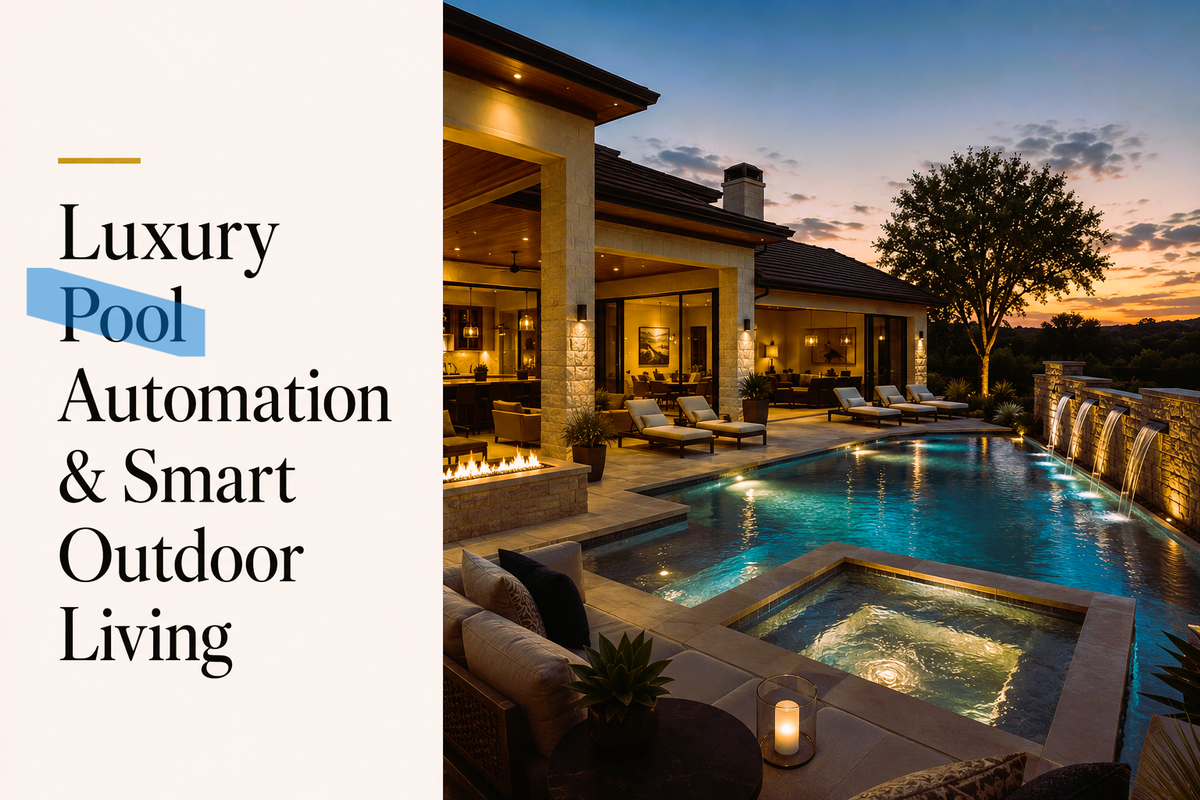
A modern system centralizes what used to be a row of separate switches and timers: the pump, the heater, pool and spa lighting, water features, and often the sanitization or saltwater chlorination system, all reachable from one interface instead of a walk to the equipment pad.
Underneath the app, the mechanism is straightforward: relays switch electrical power to each piece of equipment on or off, while valve actuators physically redirect water flow, the same actuators that isolate the spa for heating separately from the main pool, or route water through a cleaning cycle. Sensors feed the system real-time temperature and flow data so it can react to actual conditions rather than a fixed timer.
Variable-speed pumps are where the real efficiency gain shows up. Running a pump slow for long filtration cycles and only ramping to full speed when a water feature actually needs the pressure cuts energy use meaningfully, since pump power draw rises sharply with speed rather than scaling in a straight line.
Most systems also support scene-based control: one preset that fires the heater, sets the lighting, and starts a water feature together, rather than adjusting each piece separately.
The Problem: Pool Automation Usually Lives in Its Own App
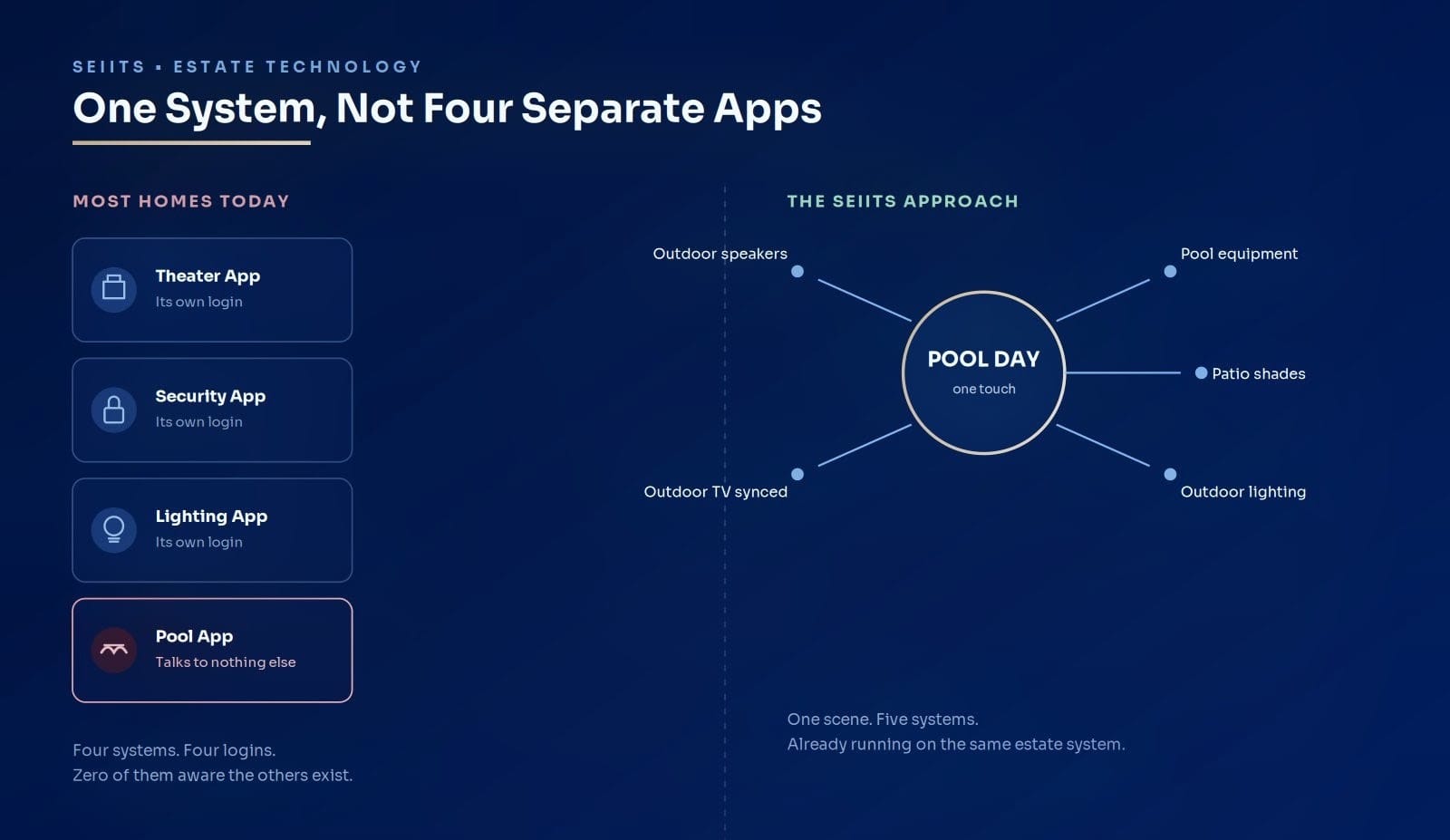
Nearly every pool automation system on the market, regardless of manufacturer, ships as a standalone product with its own dedicated app. That's a reasonable way to control a pool. It's also one more login, one more icon, one more system that doesn't know anything else in the house exists.
The practical result on a fully built-out estate: a home theater app, a security app, a lighting app, and a separate pool app, each with its own login and its own place to check. None of them talk to each other, and a homeowner ends up doing the integration manually, in their head, every time they want the whole estate to feel like one thing instead of four.
What Changes When Pool Control Lives in the Same System as Everything Else
Folding pool control into the same system already running the rest of the estate means a single scene can do what used to take four separate apps. Arriving home to a party starting in an hour, one touch can start the pool heater, set the pool and landscape lighting, and cue the outdoor audio together, the same logic already applied to a home theater's "Movie Mode" or a morning routine's "Good Morning" scene.
This is exactly the model SEIITS already runs. The SEIITS Audio-Visual and entertainment system includes a standing "Pool Day" scene alongside Movie, Party, Good Morning, Bedtime, and Away Mode, one touch, not a separate pool-branded app to open first.
Pool Automation and Entertaining
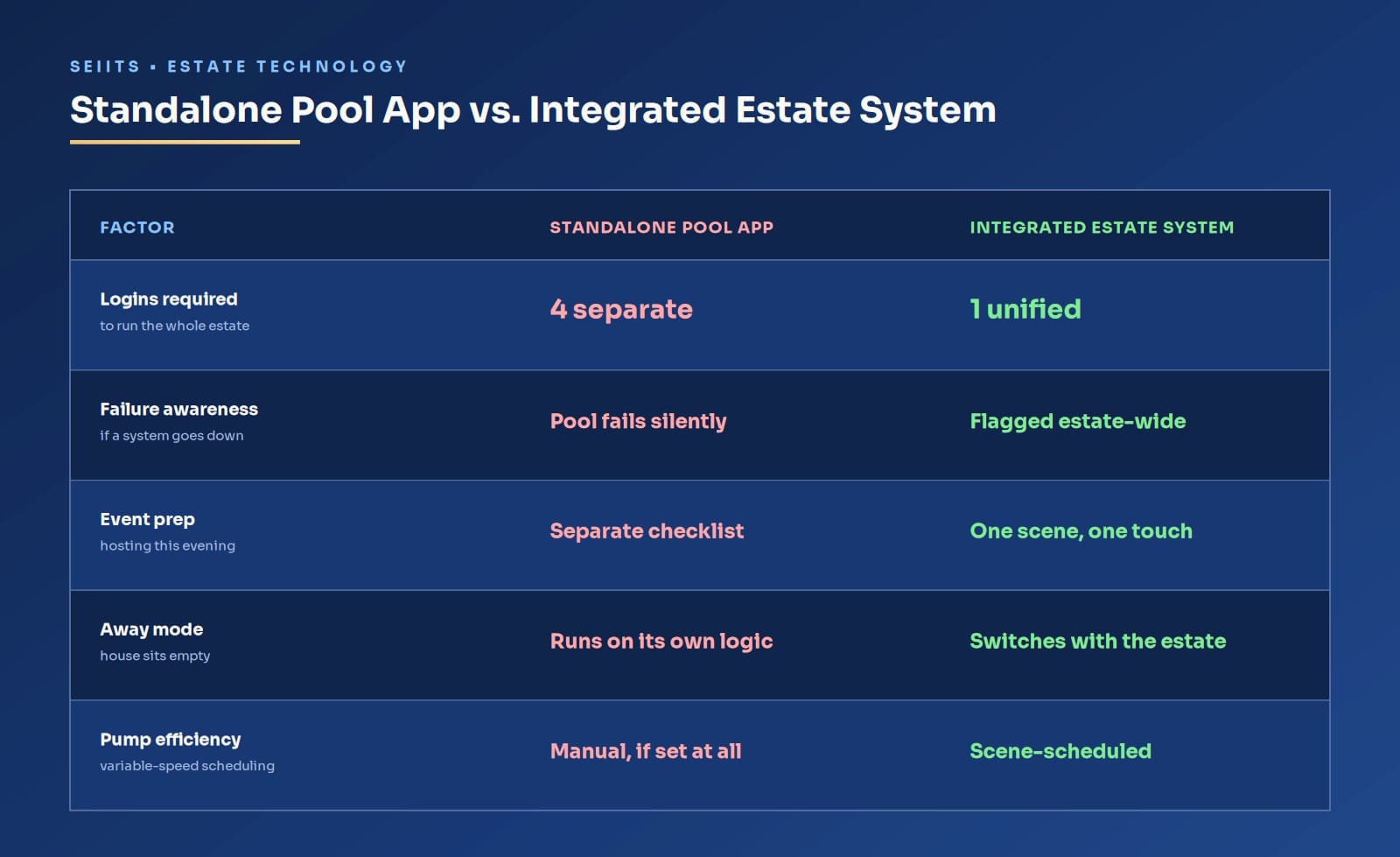
The clearest case for folding pool control into the estate's main system shows up in reverse, not when guests arrive but when the house sits empty. A single "Away Mode" scene that already secures the rest of the home can just as easily drop the pool into an energy-saving mode at the same moment, rather than the pool running its own full schedule on its own logic while every other system in the house has already switched over for the week.
Have a pool automation system that's never talked to the rest of the home? SEIITS integrates pool control into the same scene-based system already running the estate's entertainment and lighting. Book a free Home Technology Assessment at seiits.com/assessment. |
What This Actually Requires
Integration doesn't mean replacing pool equipment that's already working. Most pool automation hardware already exposes a control interface built for exactly this kind of connection; the work is bridging that existing system into the estate's broader scene and control platform rather than leaving it to report only to its own separate app.
For new construction or a pool being built alongside a new home, planning the control wiring and network drop for the pool equipment pad at the same time as the rest of the estate's systems avoids a retrofit later, the same logic that applies to any other wired system in a build.
Where This Fits Into a Broader Estate System
Bringing pool automation into an existing smart home setup is exactly what SEIITS technology consulting is built for, mapping a new or existing system against whatever scenes and controls are already running rather than leaving it disconnected. It's the same logic covered in the SEIITS guide to smart home automation integration for Texas luxury estates.
For a pool being planned as part of new construction, this is worth sequencing alongside the broader new construction smart home technology planning process, so pool control is part of the estate's system from day one.
Ongoing monitoring and scene updates are covered under SEIITS membership tiers.
A pool deserves the same one-touch simplicity as the rest of the estate, not a separate app nobody opens. SEIITS integrates pool automation into the same scene-based system running the home theater and lighting. Start with a free Home Technology Assessment at seiits.com/assessment. |
Frequently Asked Questions
What does a pool automation system actually control?
A central hub typically controls the pump, heater, pool and spa lighting, water features, and sanitization or saltwater chlorination, all from one interface instead of separate switches and timers at the equipment pad. Most systems also support scheduling and scene-based presets that adjust several of these together.
Does pool automation actually save money?
The largest real saving comes from variable-speed pump scheduling, since pump power draw rises sharply with speed rather than scaling in a straight line. Running the pump slow for long filtration cycles and only speeding up when a water feature needs the pressure cuts energy use meaningfully compared to a single-speed pump running at full power on a timer.
Why isn't pool automation usually connected to the rest of a smart home?
Most pool automation systems, regardless of manufacturer, ship as standalone products with their own dedicated app, built to control the pool alone rather than to communicate with a home's broader lighting, security, or entertainment systems. That works, but it means the pool becomes one more separate login rather than part of a unified estate system.
Can an existing pool automation system be integrated into a whole-home system later?
Usually yes. Most pool automation hardware already exposes a control interface built for this kind of connection, so integration typically means bridging that existing system into the estate's broader scene and control platform rather than replacing equipment that already works.
Should pool automation be planned during new construction?
Yes, for the same reason as any other wired system. Planning the control wiring and network connection to the pool equipment pad at the same time as the rest of the home's systems avoids a more expensive retrofit later and means the pool can be part of the estate's unified system from the start rather than added as a separate project afterward.
Comments ()