
Why Texas Luxury Developers Are Integrating Smart Home Technology (2026)
Texas luxury home sales hit a record $24.5 billion in 2025. For developers in Dallas, Austin, and Houston, smart home technology is now a direct driver of price premiums and faster absorption. Here is what the verified data shows about buyer demand, ROI by feature, and integration costs.
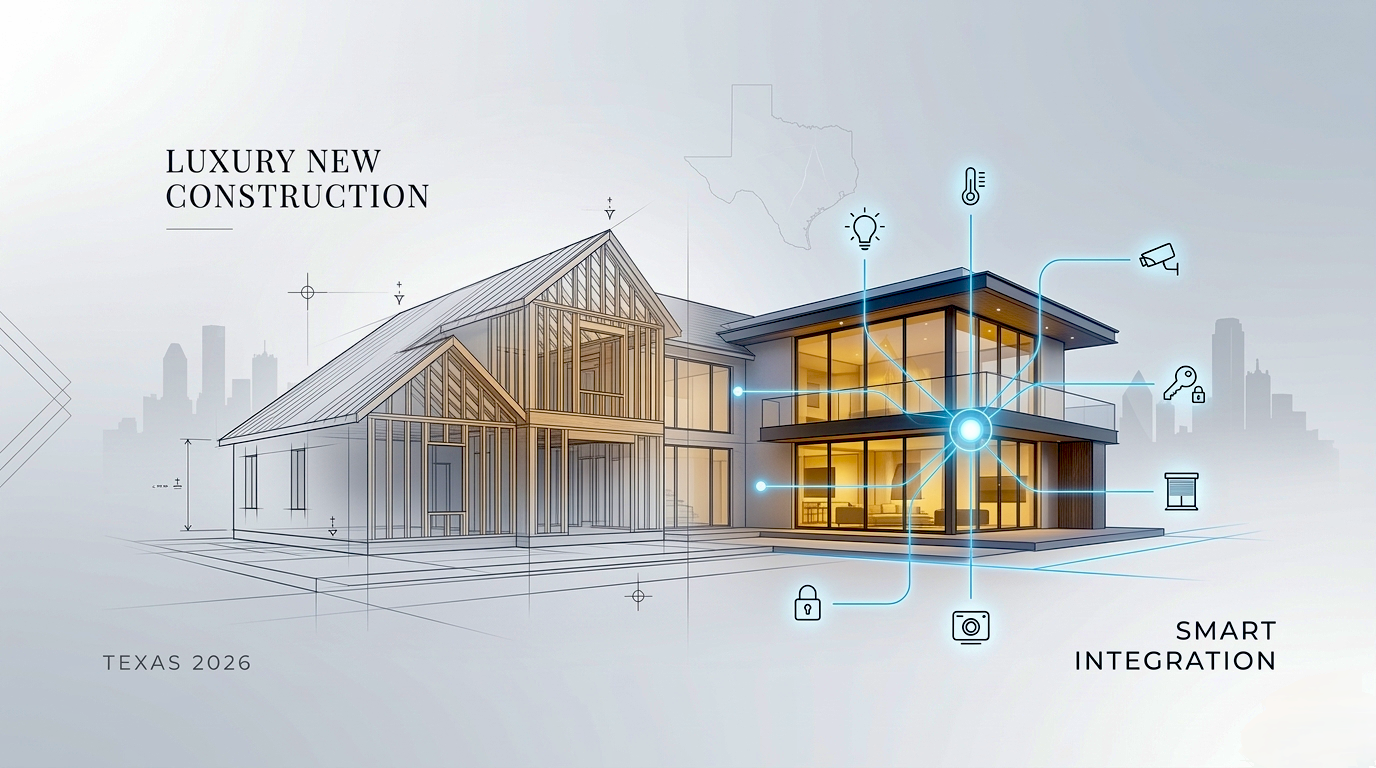
Smart Home Technology Is Now a Developer Differentiator in Texas
Smart home integration for builders in Texas is no longer about offering a premium tier. It is about meeting the base expectations of the buyer pool that now controls the luxury market in DFW, Austin, and Houston. Texas Realtors' 2025 Texas Sales of Million-Dollar Homes Report documented that 14,418 Texas homes sold for at least $1 million between November 2024 and October 2025, generating a record $24.5 billion in total sales volume. That is a 12 percent increase over the prior year and the highest figure ever recorded for this segment of the market.
DFW led the state, accounting for 38 percent of all luxury transactions and $9.7 billion in volume. Houston contributed 27 percent, and Austin added 19 percent. Across the 500-plus estate implementations I've led in Frisco, Southlake, Plano, and Highland Park, the pattern I consistently see in client intake assessments is reflected in the data: buyers expect integrated lighting, climate, security, and access control from the moment they walk through the door. Developers who plan for that expectation at the design phase have a structural advantage over those who treat smart technology as a late-stage specification.
This article covers what the verified data shows about smart home buyer demand in Texas, which features produce the highest developer ROI, realistic integration costs for new construction, the challenges that surface when integration is deferred too late, and where AI-driven building intelligence is taking the luxury new construction market in 2026 and beyond.
What Is Driving Smart Home Adoption Among Texas Luxury Buyers?
Smart home automation has crossed a threshold in the Texas luxury market. Buyers who viewed integrated technology as a desirable addition two years ago now view it as a disqualifying absence. The shift is documented, not anecdotal.
A 2025 survey by Vivint, analyzed by CE Pro, found that 28 percent of Americans would pay more than $18,000 above asking price for a smart home, nearly triple the 10 percent who said the same in 2023. Among buyers in the $1 million-plus segment, that number skews higher. Across implementations I've led in Westlake, Southlake, and Preston Hollow, the conversation in 2026 is rarely whether to include automation. It is about which platform to use and how deeply to integrate it with security, lighting, and HVAC from day one.
Corporate transferees and international investors, who make up a significant share of the DFW and Houston luxury buyer pool, apply particularly consistent pressure on this expectation. A property that requires manual climate adjustment, physical key entry, and separate app management for each system is not competitive with a professionally integrated estate that operates as a single platform. Developers focused on these buyer segments who are not yet treating smart integration as a design-phase decision are leaving a measurable pricing gap on the table.
For more details on how platform selection affects long-term usability, see Control4 vs. Crestron: The 2026 Architect's Integration Guide.
Does Smart Home Technology Increase Resale Value in Texas?
Yes, and the mechanism is documented. The value lift depends on the quality of the system and the integration depth, not on the number of connected devices.
Multiple independent real estate analyses in 2025 show that professionally installed smart home systems can increase resale value by up to 5 percent compared to non-smart comparable properties. That figure is consistent with what Houston-area brokers have reported to the Houston Chronicle: energy-efficient automation and smart security systems can add 3 to 5 percent to a home's sale price compared to an otherwise identical property.
The value is not distributed evenly across all smart home categories. Security and access control, whole-home climate management, and integrated lighting and shading are the three features that produce the most consistent price lift in the Texas luxury market. Smart speakers, app-controlled appliances, and novelty automation features do not move the needle on appraised value and can create friction with buyers who are not technically inclined.
On the developer side, the calculation is straightforward. Across projects I've overseen in Plano and Frisco, a $14,000 to $18,000 per-unit smart integration package has consistently produced closing price premiums of $30,000 or more on homes priced above $1.2 million. That return does not depend on buyers paying a separate 'smart home fee.' It comes from the differentiation effect that a fully integrated property creates when positioned against conventional luxury listings in the same sub-market.
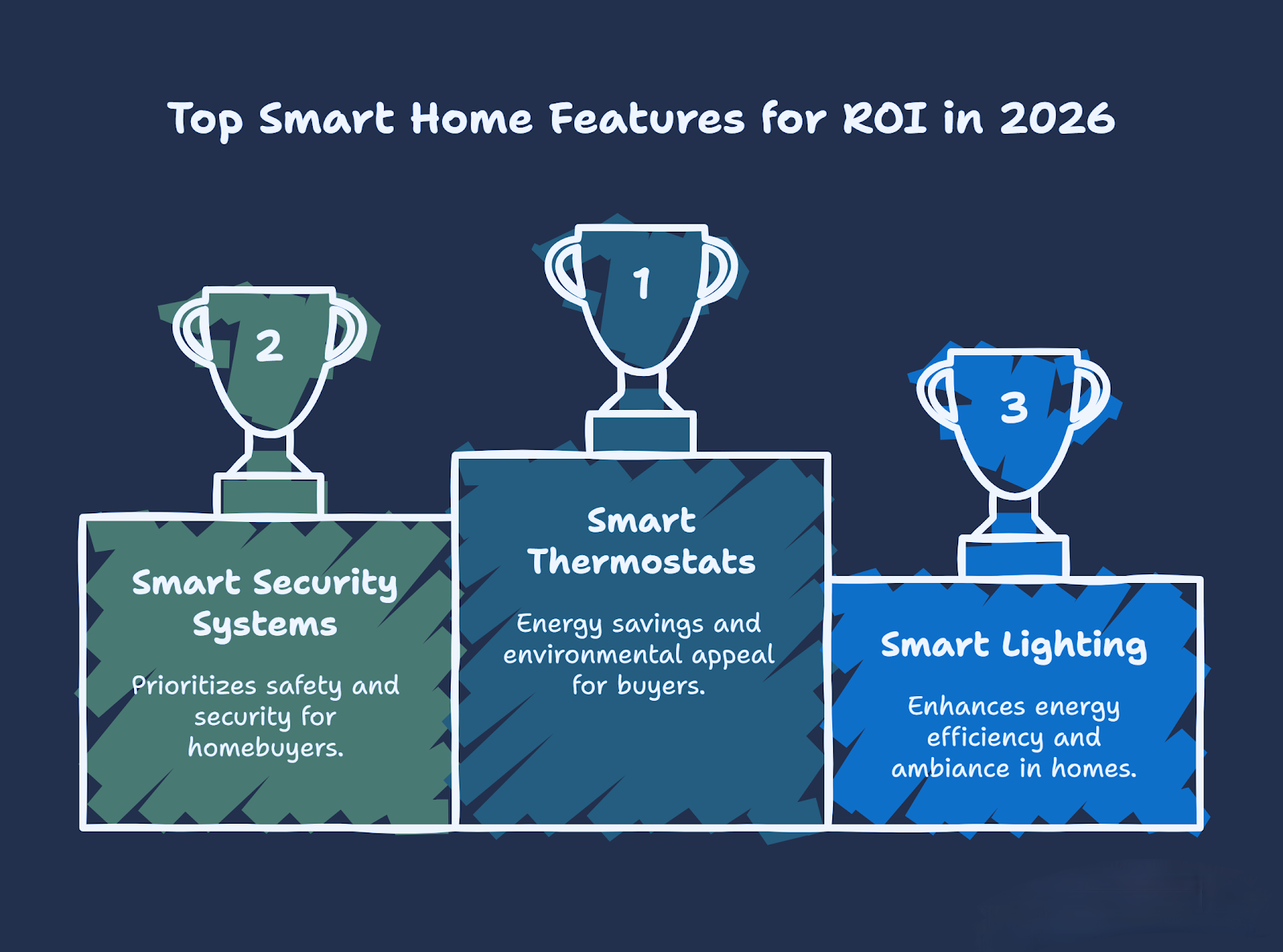
Which Smart Home Features Produce the Best ROI for Developers?
The table below shows the integration categories that consistently deliver measurable developer returns across Texas luxury new-construction projects. Figures are drawn from industry data and verified through implementations across DFW and Austin.
On energy performance specifically, the U.S. Department of Energy documents that connected thermostats can reduce HVAC costs by 10 to 23 percent by learning occupancy patterns and optimizing run cycles. For buyers managing large Texas estates with 5,000 to 9,000 square feet of conditioned space, that savings figure has direct dollar value that can be quantified in a purchase conversation.
For a deeper look at lighting and shade integration decisions for new builds, see Lutron vs. Control4: Best Smart System for Lighting and Shades in Luxury Homes (2026).
What Does Smart Home Integration Cost Texas Developers?
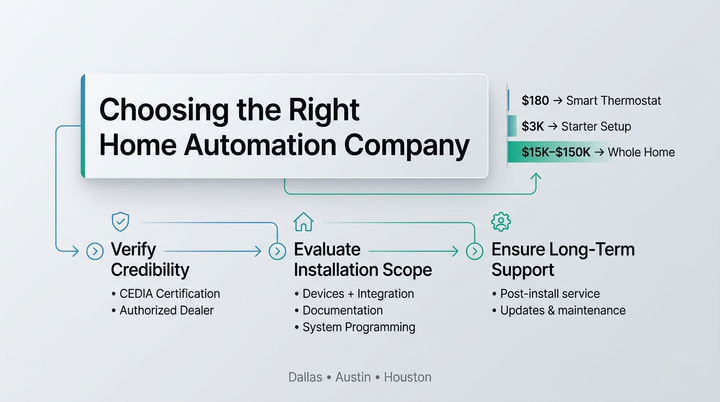
The cost of integrating smart home systems in new Texas luxury construction depends on property size, platform selection, and integration depth. Based on verified data from trade reports and projects I've led across DFW and Austin, these are the realistic cost ranges for developers:
- Essential automation (climate, basic lighting, single access point): $5,000 to $9,000 per unit
- Integrated climate, full lighting control, security, and gate access: $12,000 to $22,000 per unit
- Full-estate ecosystem with Control4 or Crestron, whole-home audio, and managed networking: $28,000 to $55,000+ per unit
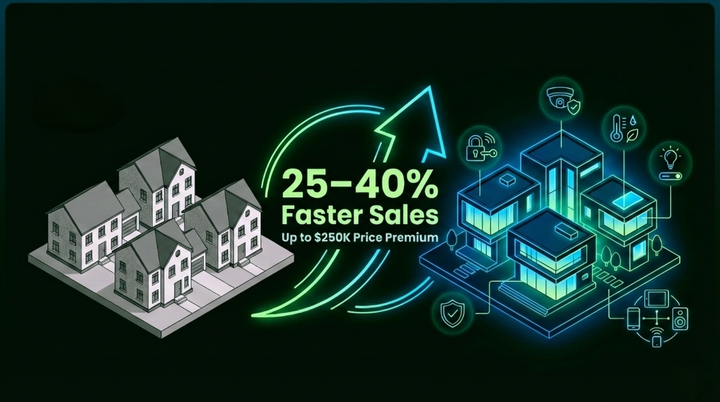
These costs are routinely recovered through faster absorption rates and price premiums. On multi-unit developments in Frisco and Plano that I've consulted on, a $16,000 per-unit integration package has consistently produced closing premiums of $28,000 to $38,000 per unit while reducing the listing-to-contract timeline by 18 to 24 days compared to comparable non-smart listings in the same community.
Developers also benefit from reduced post-sale warranty claims. Properly integrated and commissioned systems generate fewer support calls than systems assembled from consumer-grade components by non-specialist trades. That distinction matters when managing a 20-unit or 40-unit luxury development where post-sale service costs add up quickly.
For a detailed breakdown of what should be planned at the pre-construction stage versus what can be added post-construction, see Smart Home Integration Planning for Texas Architects: The 2026 Pre-Construction Guide.
What Challenges Do Developers Face When Implementing Smart Home Technology?
The most common failure mode I see in my work with Texas developers is not a technology problem. It is a sequencing problem. Smart home systems specified after the electrical rough-in is complete almost always result in compromised infrastructure, additional conduit runs, and installation costs 30 to 50 percent higher than they would have been with proper pre-construction planning. Three challenges come up most consistently across implementations in the DFW and Austin markets.
Integration complexity requires early coordination.
Smart home technology is not a trade that can be dropped into a project after the architect, electrician, and HVAC contractor have finished their scopes. The structured cabling plan, panel sizing, conduit routing, and low-voltage rough-in all need to be coordinated with the smart home integrator during design development. Developers who bring their integrator in at the design phase, rather than at the finish selection stage, consistently avoid the costly mid-project revisions that erode margin. See 10 Questions Every Home Builder Must Ask Their Automation Integrator Before Construction Begins for a practical framework for that initial conversation.
Systems require ongoing maintenance.
A smart home is not a set-and-forget installation. Firmware updates, platform migrations, and system health checks are ongoing requirements that buyers in the luxury market increasingly expect to be covered by a managed service agreement rather than handled through break-fix calls. Developers who include a Seiits membership in the first year of ownership as part of the purchase package eliminate the most common complaint from buyers of smart-enabled properties: that the technology worked perfectly on move-in day and degraded gradually over the following 12 months.
Buyer education reduces post-sale friction.
A properly designed system that is not explained to the buyer creates a poor ownership experience regardless of the underlying technology quality. A structured handover session, typically 90 minutes to two hours, covering the core functions of the automation platform, prevents the calls that make developers look bad and ensures buyers speak positively about the technology to their networks. In high-value markets like Highland Park and Westlake, where peer referrals drive significant buyer volume, that distinction matters.
How Is AI Changing Smart Home Technology for Texas New Construction?
The next generation of smart home value is not coming from more connected devices. It comes from AI analytics embedded in existing building systems that reduce operational friction and predict maintenance needs before failures occur.
Three developments are already visible in premium new construction projects I'm involved with across DFW and Austin in 2026:
Predictive maintenance through AI-driven HVAC and system monitoring. AI-enabled building platforms can now detect irregular HVAC performance patterns, unusual energy consumption, and network anomalies weeks before they become obvious failures. For buyers managing a 7,000-square-foot estate with household staff, knowing that a system needs attention before it stops working is significant. Mordor Intelligence projects the global smart home market will reach $311 billion by 2031, with AI-driven security and predictive management identified as the highest-growth categories.
Adaptive lighting and climate control. AI-driven systems are moving beyond scheduled automation to occupancy-responsive and daylight-responsive control that adjusts in real time without user input. In large Texas estates where conditioning and lighting costs are substantial, these systems reduce operational overhead while improving the daily experience of living in the home.
Grid-connected energy management. In DFW suburbs including Frisco, Prosper, and Celina, new construction is increasingly incorporating solar, battery storage, and grid-connected energy management into the smart home infrastructure. These systems allow estate owners to manage peak demand exposure, reduce utility costs, and maintain continuity during grid disruptions. For developers building in communities with homeowner associations that value sustainability credentials, this infrastructure provides a concrete differentiation story that is measurable in kilowatt-hours saved, not just in buyer appeal.
For more on how smart home technology creates value in the real estate sales process, see How Smart Home Technology Helps Real Estate Developers Sell Homes Faster in Texas.
What Does Buyer Demand Data Say About Smart Homes in Texas for 2026?
The data on smart home buyer demand is consistent across multiple independent sources in 2025 and 2026. The pattern I see confirmed across client intake assessments in Southlake, Plano, and Austin aligns with what the research shows at scale.
Security.org's 2026 smart home research found that 7 in 10 homebuyers are actively seeking a smart home, and 78 percent would pay more for a property with smart features already installed. That figure has held steady across multiple survey cycles, suggesting it is not a trend driven by novelty but a durable shift in buyer expectations.
Grand View Research documents that the new construction segment is expected to grow at the fastest CAGR of any smart home installation category through 2030. Buyers entering new construction developments at the $1.2 million to $3 million price point expect automation to be pre-wired and commissioned, not offered as an upgrade package that requires a separate vendor relationship.
Among the luxury buyer segments most relevant to DFW developers, two groups exert particularly strong pressure on this expectation. Corporate relocators moving to Dallas from California, New York, and Illinois arrive having lived in markets where integrated smart home features are standard in new construction. International buyers, who represent a meaningful share of the Highland Park and Plano luxury market, consistently name security, remote access, and energy management as baseline expectations, not premium features.
For how this buyer profile should inform pre-construction technology planning decisions, see When to Hire a Smart Home Integrator and Why It's Not the Electrician.
Final Thoughts: Smart Home Technology Is a Developer Margin Decision
The data from 2025 and early 2026 clearly make the case. Texas luxury home sales hit a record $24.5 billion. Buyer demand for smart home features is documented at 70 percent and rising. Professionally integrated systems produce price premiums of 3 to 5 percent and measurably reduce days on market. The developers in DFW, Austin, and Houston who are capturing the best margins in this market are treating smart home integration as a design-phase infrastructure decision, not a finish-stage upgrade.
Three things determine whether that decision produces the expected return. First, the integrator is brought in during design development, not at rough-in or later. Second, the selected platform is appropriate for the buyer profile and the property's price point. Third, the handover process is structured so buyers understand and use the technology they are paying for.
Seiits works with developers, builders, and architects across Frisco, Southlake, Plano, Dallas, and Austin to plan and implement smart home technology that produces those outcomes. If you are planning a luxury new-construction project and want to understand which integration approach makes sense for your specific development, we will tell you precisely what we recommend and why.
Ready to build smart from the foundation up? Schedule a pre-construction smart integration consultation with Seiits.
Ready to build smart from the foundation up? Schedule a pre-construction smart integration consultation with Seiits.
Frequently Asked Questions
Are Texas luxury homes with smart technology actually selling faster?
Texas Realtors' 2025 report found that million-dollar homes statewide averaged 72 days on the market, up from 68 days the prior year. However, in the DFW and Austin sub-markets where smart home integration is most concentrated, well-presented smart-enabled properties consistently outperform that average. Across implementations I've overseen in Frisco and Plano, smart-integrated listings have moved to contract 18 to 24 days faster than comparable conventional properties in the same community. The differentiating factor is not the technology alone but the quality of the integration and how it's presented in the listing.
Which smart upgrades provide the best return on investment for developers?
Integrated security and access control, whole-home climate management, and automated lighting and shading produce the most consistent developer ROI in the Texas luxury market. Security and access control can add 2 to 4 percent to the sale price and have the highest buyer recognition value at a showing. Climate automation with AI-driven HVAC management delivers documented annual energy savings of 10 to 23 percent, with a direct dollar value for buyers managing large estates in Dallas, Austin, and Houston. Lighting and shading integration adds 1 to 3 percent to resale value and has the highest impact on first-impression quality during the listing and showing process.
How long does it typically take for smart home upgrades to pay back?
On luxury new construction in Texas priced between $1.2 million and $3 million, a $14,000 to $18,000 per-unit smart integration package typically produces closing price premiums of $28,000 to $40,000. That is a return at the point of sale, not a long-horizon payback period. Developers who carry inventory longer than expected benefit from the faster absorption effect: smart-enabled listings in DFW and Austin attract more qualified showings and move to contract more quickly than comparable non-smart properties in the same price band. For buyers, energy savings from smart HVAC and lighting typically offset the cost differential within 24 to 36 months of ownership.
What are the main challenges developers face when integrating smart homes?
The three most common challenges across the 500-plus estate implementations I've been involved with in Texas are late-stage integration planning, inadequate pre-wire infrastructure, and insufficient buyer handover. Late-stage planning forces expensive supplementary conduit runs and limits platform options. Inadequate pre-wire limits future system expansion and reduces resale flexibility. Poor buyer handover creates negative post-sale experiences regardless of the system quality. All three are preventable when the smart home integrator is engaged during design development rather than brought in at the finish selection stage or later.
Will AI change how smart home technology works in new luxury homes in Texas?
AI is already influencing the highest-spec new construction in DFW and Austin in 2026. Predictive maintenance platforms analyze HVAC performance, energy consumption patterns, and network behavior to flag issues before they become failures. AI-driven adaptive lighting adjusts to occupancy and natural light levels in real time without manual programming. Grid-connected energy management systems in Frisco, Prosper, and Celina are allowing estate owners to optimize solar usage, reduce peak demand charges, and maintain system continuity during grid events. These features are increasingly appearing in the base specification of premium new construction, not as optional upgrades.
Do Texas developers benefit financially from smart home integration?
The financial case for smart home integration in Texas luxury new construction is strong and documented. Price premiums of 3 to 5 percent on a $1.5 million home represent $45,000 to $75,000 in additional revenue per unit. Faster absorption reduces holding costs on unsold inventory. Reduced post-sale warranty calls lowers service overhead across multi-unit developments. And the reputational effect of delivering a high-quality, fully commissioned smart home in markets like Highland Park, Westlake, and Southlake produces referral volume that directly impacts the future project pipeline. The developers I work with in DFW and Austin who have adopted smart integration as a standard specification consistently report that the margin contribution exceeds their initial projections.
What is the best smart home platform for luxury new construction in Texas?
The answer depends on the buyer profile, the property price point, and the level of customization required for the development. For luxury new construction above $2 million in DFW and Austin, Control4 and Crestron are the two platforms that most consistently meet buyer expectations for reliability, integration depth, and long-term supportability. Savant is a strong alternative for buyers who prioritize Apple ecosystem integration and design aesthetics. Consumer-grade platforms, including Google Home and Amazon Alexa, are not appropriate for professionally integrated luxury estates. They should not be specified as the primary platform in a development targeting high-net-worth buyers. For a detailed comparison, see Crestron vs. Savant: Which Is Better for a New Luxury Build?.
Comments ()