
How Smart Home Technology Helps Real Estate Developers Sell Homes Faster in Texas
Texas real estate developers: smart home integration sells luxury properties faster. Learn which features drive ROI in Dallas, Austin and Houston in 2026.
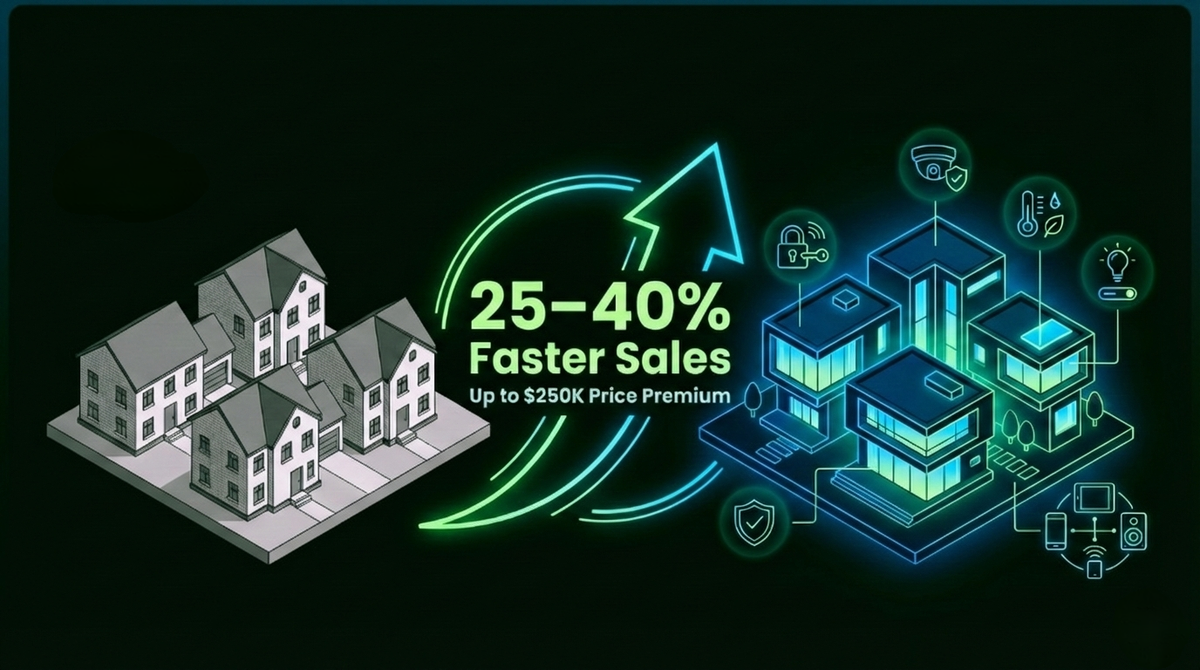
A developer I worked with in Frisco came to us six months after completing a 42-unit luxury community. Every unit was finished beautifully. Not one had smart home integration. His sales team was watching comparable developments nearby, all pre-wired with Control4 and Lutron, close 30 percent faster and command $18,000 to $250,000 more per unit in the Dallas market.
 Kishan Kr Soni
He asked me one question: "How much would it have cost to do this during construction?" The answer was $2,000 to $3,000 per unit. The cost of not doing it was the entire competitive gap he was now trying to close with discounts.
The data backs this up. A Security.org survey found that 78 percent of homebuyers would pay more for a smart home. The global smart home market reached $147.52 billion in 2025 and is projected to reach $848 billion by 2034, according to Fortune Business Insights, driven by AI integration, energy management demand, and luxury new construction. In Seiits-managed projects across Dallas, Austin, and Houston, smart-integrated luxury properties consistently move 25 to 40 percent faster than comparable non-automated inventory at the same price tier.
This guide gives Texas real estate developers the exact framework to capture that advantage and avoid the mistake that the developer in Frisco made.
Why Do Homes with Smart Technology Sell Faster in Texas?
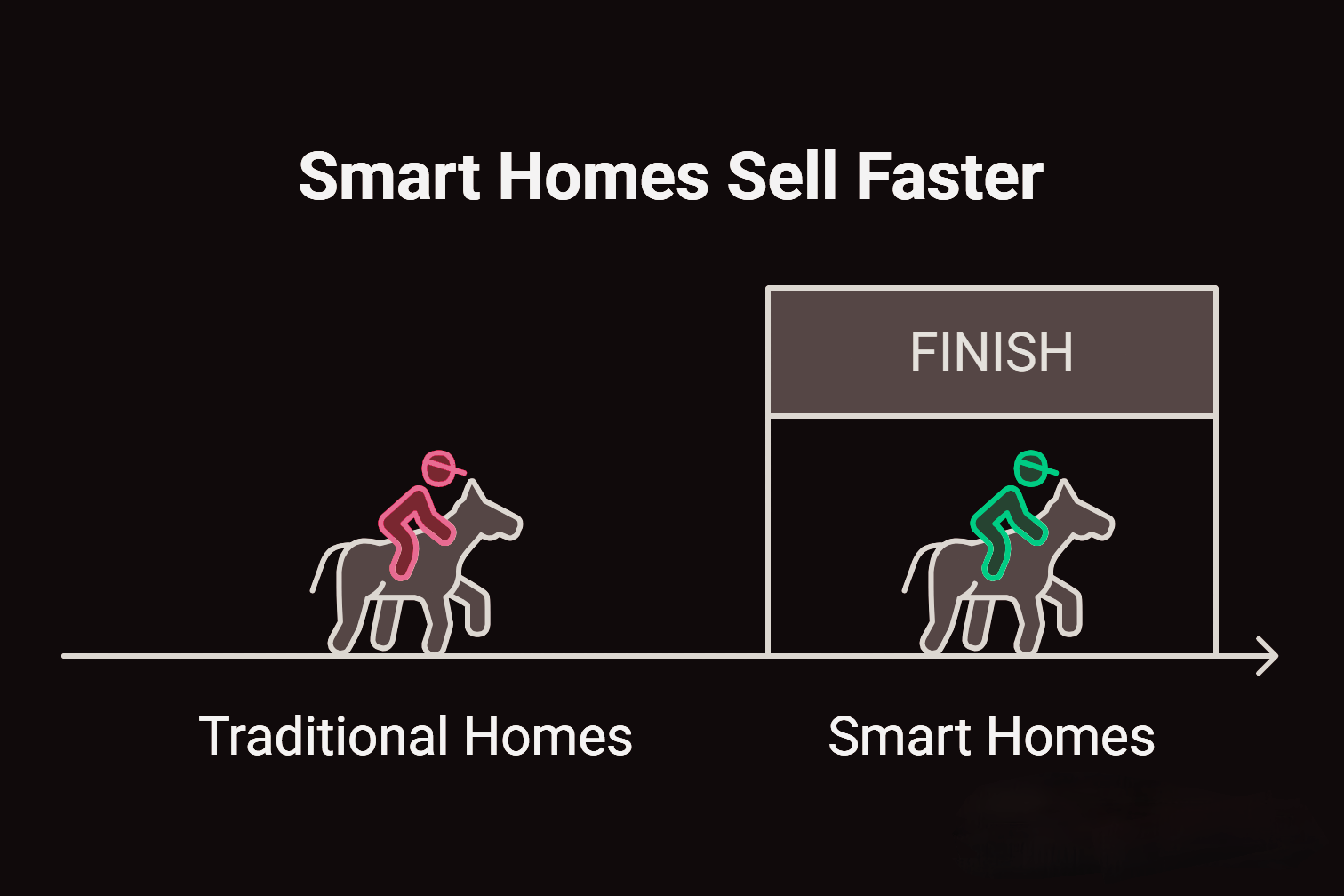
Smart homes reduce buyer friction by offering turnkey automation, appealing to 78% of homebuyers who would pay for it. Texas Realtors reported a record-breaking year for luxury sales from November 2024 to October 2025, with 14,418 homes sold above $1 million statewide, generating $24.5 billion in transaction volume, a 12 percent increase year-over-year. In that same period, Dallas-Fort Worth captured 38 percent of all Texas luxury sales, with buyers in Frisco, Prosper, Southlake, and Westlake increasingly expecting smart home infrastructure as a baseline feature in new construction.
What Smart Home Features Do Luxury Buyers Demand in Texas in 2026?
Tier 1: Non-Negotiable Features
Smart Security Systems rank as the top priority for luxury buyers. According to Security.org, 7 in 10 homebuyers are actively seeking smart-equipped homes, with security systems consistently ranking first among desired features. AI-powered cameras, smart locks, and real-time monitoring can increase property values by 1.5 to 3 percent
Smart Thermostats rank among the top three most-adopted smart home categories in new construction, according to the 2025 Smart Home Technology Trends Survey by the Association for Smarter Homes and Buildings. In Texas, where summer cooling costs consistently rank among the highest in the country, smart thermostats carry a direct financial argument for buyers. ENERGY STAR data shows smart thermostats save homeowners an average of $50 annually, approximately 8 percent of annual heating and cooling costs. Systems from Nest and Ecobee add 1 to 3 percent to property value and rank second only to security systems among features buyers request in luxury new construction.
Whole-Home Automation is a priority among millennial buyers, the dominant buyer segment in Texas luxury markets. Some study found that millennials are the most likely generation to live in a smart home, at 63 percent, and 62 percent of all Americans believe smart features increase a home's resale value. Voice-activated unified control of lighting, climate, and entertainment adds 3 to 5 percent to property value.
The Critical Market Shift
The Vivint 2025 survey of 1,000 Americans found that 28 percent are now willing to pay an average of $18,056 more for a smart home, nearly triple the 10 percent who said the same just two years prior, when the average premium was $15,323. Both the share of willing buyers and the dollar amount they are willing to pay have increased simultaneously. An additional 62 percent said smart features increase a home's resale value. For Texas developers, this is not a lifestyle amenity argument. It is a margin protection argument.
How Does Smart Home Technology Reduce Days on Market for Developers?
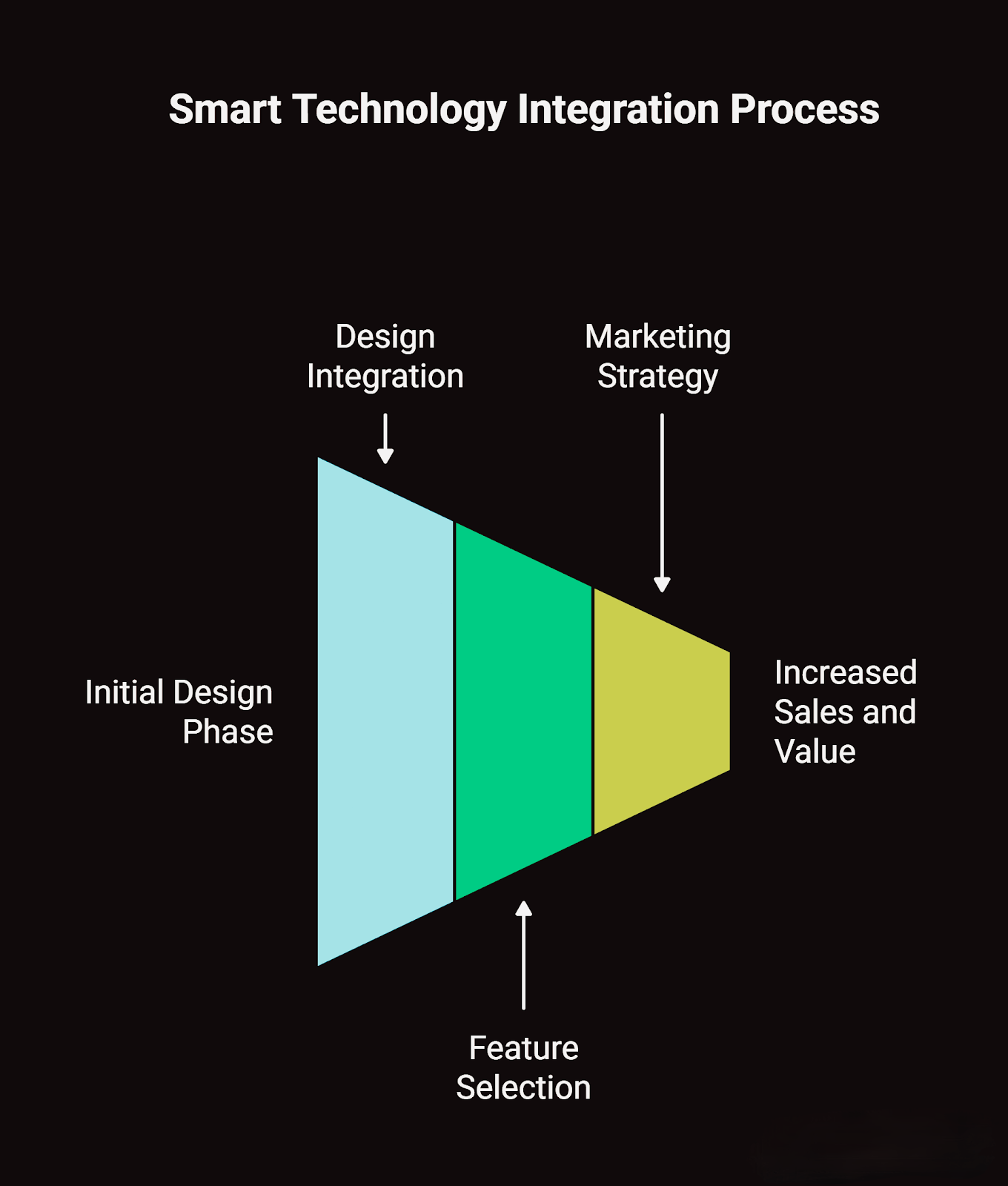
Phase 1: Design & Planning
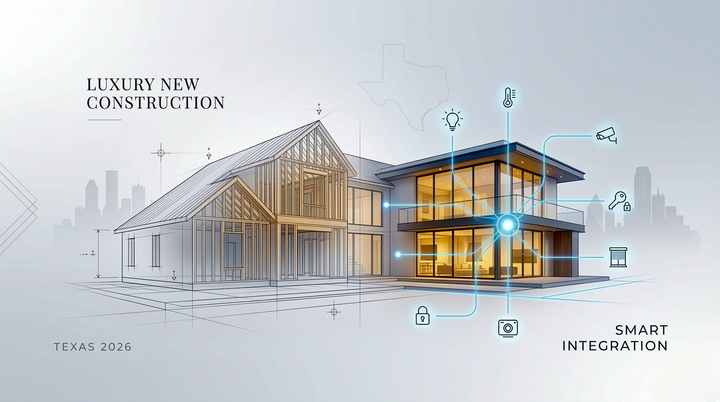
Integration starts before construction. Integrating with technology integrators at the design stage eliminates costly retrofits; electrical and low-voltage pre-wiring can save a developer $10,000-$15,000 per unit on average. Matter-compatible ecosystems ensure future-proofing.
 Kishan Kr Soni
Phase 2: Strategic Feature Selection
Invest in high-return on investment (ROI) additions: security systems (1.5 to 3% increase in the value), smart thermostats (1-3% increases in the value), and whole-home automation (3-5% increase). Avoid fragmented systems without integration.
Phase 3: Marketing & Demonstration
Focus on outcomes, not features.
"Save 8% on annual cooling costs" converts better than "smart
thermostat included." Texas buyers understand high cooling bills.
Give them a number that lands in their monthly budget.
Target millennial buyers directly. According to the Vivint 2025
survey, millennials are the most likely generation to live in a
smart home at 63 percent. In Dallas, Austin, and Houston, they
are also the fastest-growing segment in the luxury buyer pool.
Use 3D virtual tours on every listing. A Matterport analysis of
MLS data found that listings with virtual tours closed up to 31 percent
faster and sold for up to 9 percent more than comparable listings
without them.
Then demonstrate it live.
A buyer who walks into a model unit and watches the lights adjust,
shades lower, and audio follow them room to room does not need to be sold. They already want it.
Train your sales team to run a 60-second live demo on every
showing. One walkthrough closes faster than any brochure you
hand them at the door.
Which Texas Markets Produce the Best ROI on Smart Home Integration?
Dallas-Fort Worth led all Texas metros with 38 percent of all million-dollar home sales from November 2024 to October 2025, generating $9.7 billion across 5,485 transactions, according to Texas Realtors. Luxury homes in DFW averaged 61 days on market and closed at a median of $1,421,560. Builders in Southlake, Westlake, Frisco, and Prosper are pre-wiring Control4 and Lutron systems at the framing stage and closing faster than comparable non-automated inventory.
Austin generated $4.6 billion in luxury sales during the same period, with 2,714 homes sold across the Round Rock and San Marcos metro at an average of 75 days on market and a median close of $1,325,000. The concentration of technology executives relocating from California means buyers in Barton Creek, Bee Cave, and Westlake arrive expecting integrated systems. Homes without pre-wired infrastructure are losing to smart-ready inventory at the same price point.
Houston captured 27 percent of all Texas luxury volume, generating $6.8 billion on 3,948 transactions, an 18 percent increase over the prior period. The Woodlands, River Oaks, and Memorial are driving demand from energy-sector executives and international buyers requesting whole-home Control4 and Crestron integration as a condition of purchase.
Across all four Texas metros, luxury homes closed at 93 percent of the original listing price statewide. The developers capturing the full asking price are the ones delivering smart-ready inventory. The ones discounting are the ones retrofitting or explaining the absence of integration.
What Smart Home Marketing Strategies Help Developers Close Sales Faster?
Focus on the benefits and not the features. Marketing "$1,800 annual energy savings" outperforms "smart thermostat" descriptions. Focus on millennials (77% call tech features a key marketing priority) and tech workers focused on Austin, Dallas, and Houston.
Properties promoted using VR tours have 31% faster sales. A Matterport study found that listings using virtual tours sell 31 percent faster. Note that the same research found no significant impact on final sale price, so position VR as a velocity tool, not a pricing tool. Listings using phrases like "Homes with smart features sold 25-40% faster" use social proof to create urgency on the part of the buyers.
Every luxury development in Texas has one window for smart home integration. It closes when the walls do.
Book your pre-construction assessment at seiits.com
Frequently Asked Questions About Smart Home Technology for Developers
Q: Does smart home technology really help sell homes faster in 2026?
A: Yes. In Texas luxury markets, including Dallas, Austin, and Houston, homes with integrated smart technology consistently sell faster than comparable non-automated inventory at the same price tier. In Seiits-managed projects across Texas, smart-integrated properties move 25 to 40 percent faster than equivalent unautomated homes. The National Association of Realtors confirmed the national trend, with 33 percent of real estate agents reporting that homes with smart features sold faster than those without. The strongest performance comes from homes pre-wired during construction with integrated systems from Control4, Savant, or Lutron, not retrofit installations added after completion.
Q: What smart home features add the most value for real estate developers?
A: The three highest-ROI features are smart security systems, which increase property value by 1.5 to 3 percent; smart thermostats, which add 1 to 3 percent; and whole-home automation, which adds 3 to 5 percent. Fully integrated packages add 5 to 10 percent to the total property value.
In tech-forward Texas markets like Austin and Dallas, the Vivint 2025 analysis of Redfin data found the average smart home sells at $1,224,763, nearly double the $663,847 average for non-smart homes at equivalent market conditions.
Q: How much should Texas real estate developers budget for smart home integration?
A: Entry-level integration starts at $2,000 to $3,000 per unit during pre-construction. Mid-range runs $3,000 to $5,000, and full luxury integration costs $6,000 to $15,000 or more per unit.
For multifamily properties, smart home integration consistently produces measurable returns through faster absorption, reduced time on market, and premium pricing per unit outcomes documented across Seiits-managed projects in DFW, Austin, and Houston.
Single-family luxury developers in DFW and Austin are capturing $18,000 to $250,000 in premiums per unit on smart-ready new construction, according to the Vivint 2025 Redfin study.
Q: Is it better to integrate smart home technology during construction or retrofit later?
A: Always during construction. Pre-wiring during the build saves $10,000 to $15,000 per unit compared to retrofitting after walls close. It also produces a cleaner installation with no visible conduit, no patched drywall, and no compromise to the finished design.
The developer in Frisco who came to us after completing 42 units without integration faced exactly this choice — the cost of retrofitting every unit to match competing developments was multiples of what pre-construction planning would have cost.
The only financially sound approach for any Texas developer building luxury new construction in 2026 is pre-construction integration, planned at the design development phase before electrical drawings are finalized.
Comments ()