10 questions that every home builder must ask their home automation integrator (Before Construction Begins)
Introduction
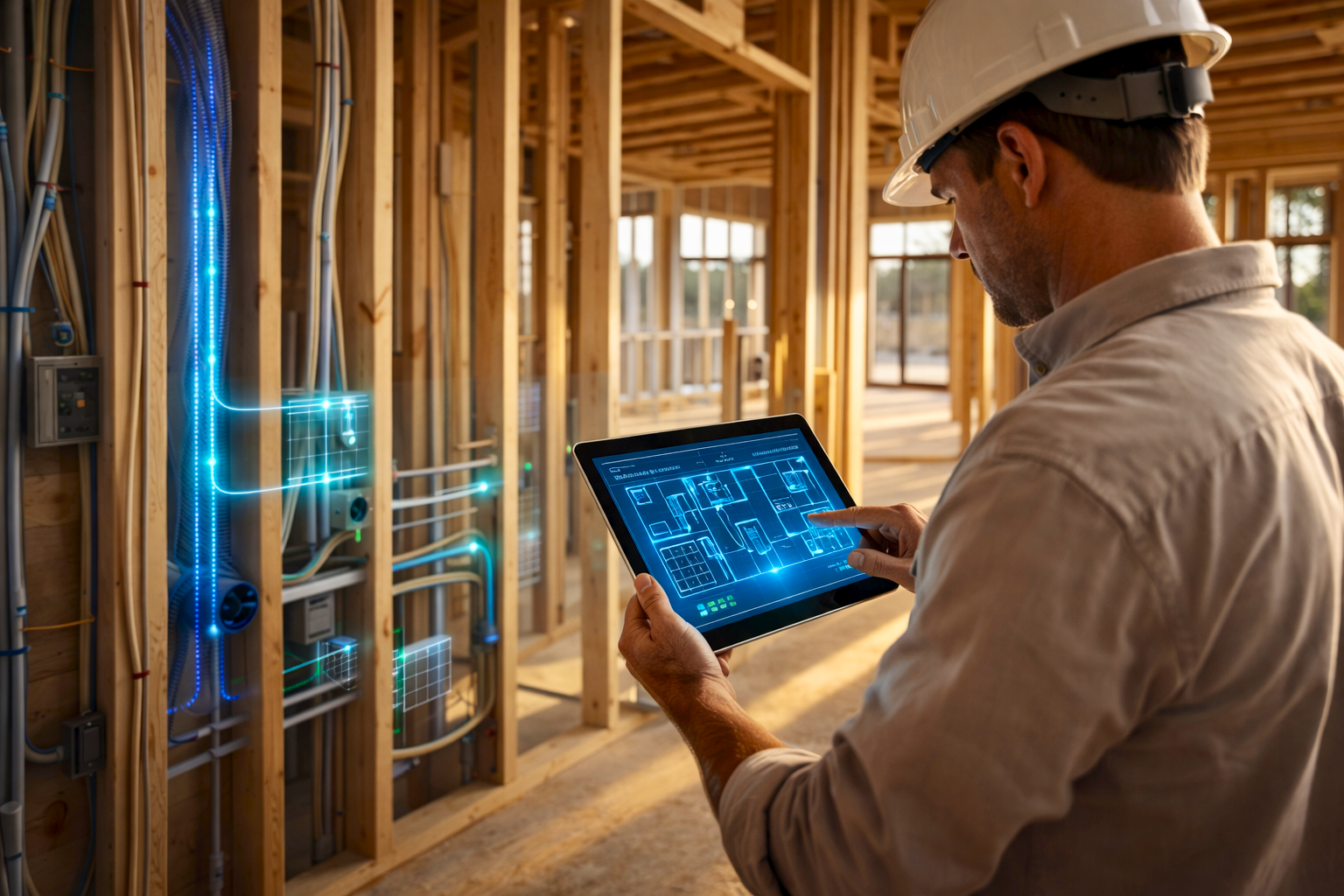
Imagine the following situation: one of the developers in Austin finishes framing a 20-unit complex when he notices that there is no data wiring conduit. The walls are struck down, the timetables are missed, and the prices have skyrocketed.
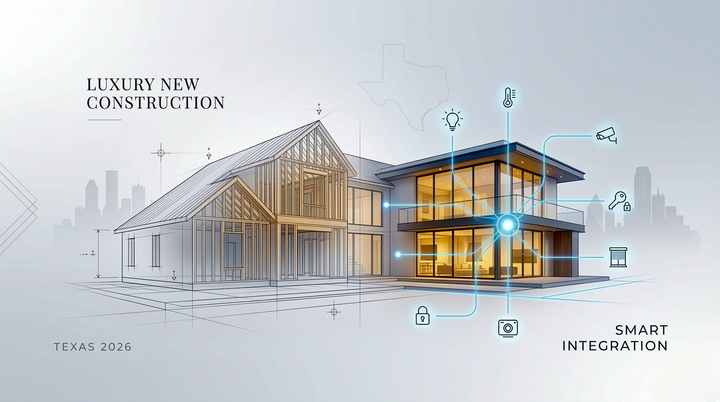
That nightmare occurs because builders bring the automation team into the picture too late. According to industry authorities like CEDIA and the HTA, the single most expensive mistake builders make is bringing the technology integrator in after the framing phase. By the time the drywall goes up, the opportunity for seamless, cost-effective integration is already gone.
It is the checklist that is going to become your pre-construction cheatsheet, the 10 smart questions that save weeks of chaos and thousands in rework.
At SEIITS, we have worked with constructors in Texas to ensure technology is seamlessly woven into the architectural DNA of the home, rather than bolted on as an afterthought.
Why Smart Home Integration Planning Can’t Wait Until Construction
Smart homes have become household requirements and not add-ons or luxuries. Delaying integration means electrical, HVAC, and security systems end up fighting for space.
In one Houston project, a builder spent $14 k redoing drywall because lighting circuits weren’t planned for automation. Early involvement would have cost less than half this.
The integrators are not mere technology sellers, but rather architect partners, who translate your dream into a systematic cabling system, a computer network, and comfortable living systems.
The 10 Essential Questions Builders Should Ask Before Hiring an Integrator
Do you include elaborate Design Drawings and Wiring Diagrams?
Request the CAD or BIM drawings, as per your building plans, in accordance with the architect. Without them, electricians and HVAC teams often improvise, creating interference issues later.
A Dallas builder saved $12,000 in coordination costs when the integrator supplied pre-approved AV and lighting schematics before rough-in.
2. When Should We Bring You Into the Project?
The right answer: during schematic or design development, not after framing. Automating the wiring means running it behind the walls, and this is painful to implement in a retrofitting way.
Scenario: When the smart thermostat cabling was not planned early, a developer who deferred integration had to spend 3 weeks correcting the schedule.
About the integrator meetings, take him to the initial design meeting, not the last walkthrough.
3. What Are Your Network Requirements and Bandwidth Calculations?
Every smart system has one backbone, a reliable network. Ask:
- Which type of structured cabling (Cat 6A, fiber, etc.) does she/he need?
- What’s the projected bandwidth per unit?
A multifamily complex built in Houston was upgraded to a fiber backbone to support a 40-unit system connected without lag in the streaming process.
Pro tip: Ask for a "Network Infrastructure Plan" with information about where the routers are placed, where the access points are placed, and how redundant the system is.
4. How Do You Future-Proof the System for Scalability and Upgrades?
Tech changes rapidly; what seems state-of-the-art today would be outdated in 3 years. Your integrator should design for modular upgrades and compatibility with open standards like Matter or Z-Wave.
Developers who specified in 2022 that their devices were compatible with Matter are now updating devices through software and no longer use rewiring.
Ask: If a new standard is released, will my clients have to be rebuilt or only the firmware?
5. What Smart Systems or Platforms Do You Recommend and Why?
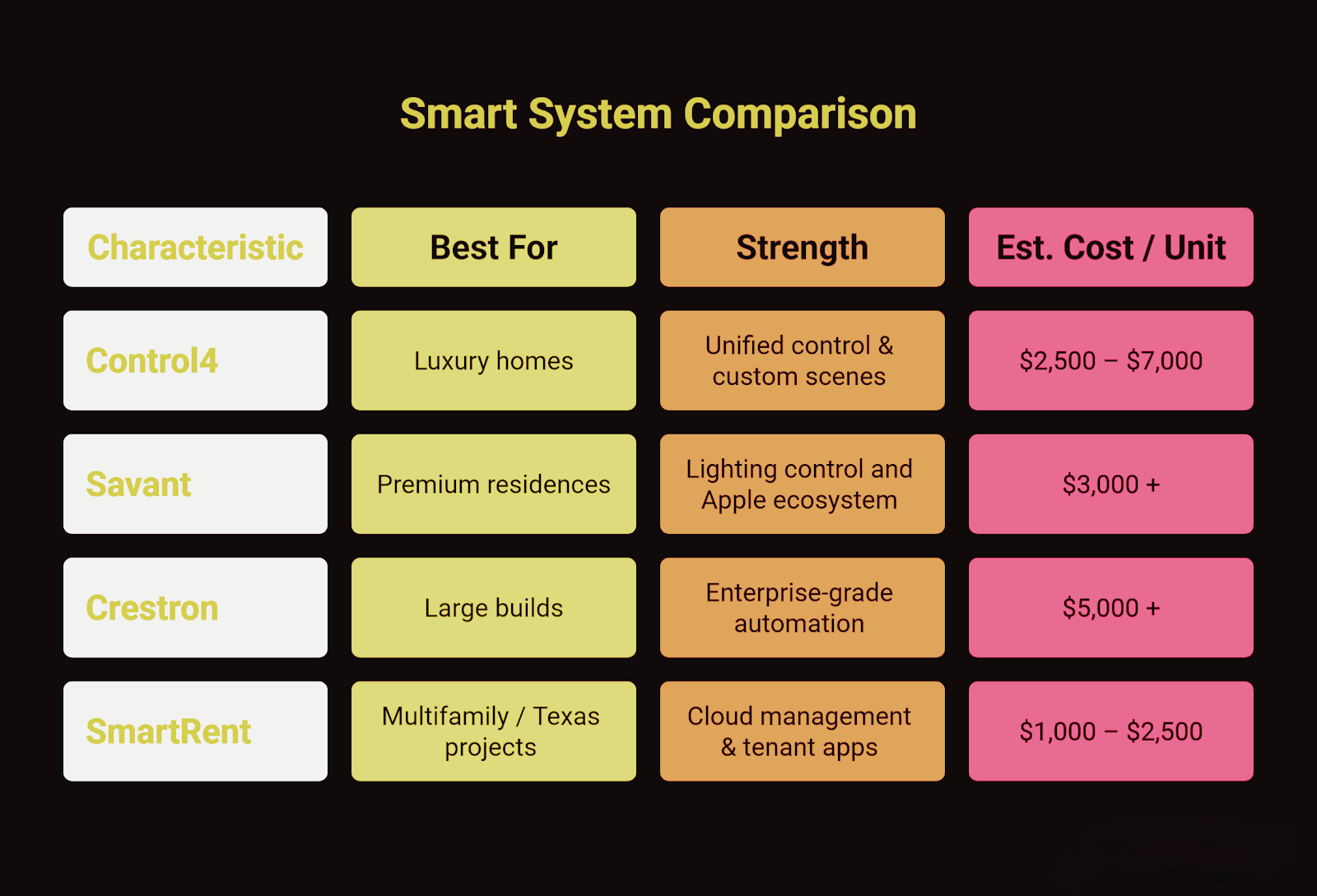
Vendor-agnostic integrators provide you with flexibility. Here’s a quick comparison:
Note: Estimates represent base multi-family/condo unit costs. Standalone luxury custom homes typically scale from $15k to $50k+, depending on square footage.
Tip: Ask if they have partnerships or certifications with these platforms.
6. How Do You Coordinate With Electricians, HVAC, and Lighting Designers?
Smart systems intersect with nearly every trade. Your integrator should host weekly coordination calls and share up-to-date drawings.
An Austin-area builder cut rework by 20% after the integrator synced with the electrical subcontractor using shared BIM files.
Poor coordination = double work. Smart coordination = smooth inspections.
7. What Documentation and As-Builts Will You Provide at Handover?
Post-construction clarity is critical for maintenance and resale. Insist on:
- Finalized wiring diagrams
- Device inventory lists
- User manuals and digital backups
A Dallas builder’s resale units moved faster because buyers trusted the “Smart Home Owner Binder,” detailing every installed component.
8. What’s Included in Your Post-Installation Support Plan?
Great integrators don’t vanish after move-in. Ask:
- Do you provide 24/7 remote monitoring?
- What’s your warranty period?
- Are software updates included?
A Fort Worth developer partnered with an integrator offering 2-year remote diagnostics, reducing on-site service calls by 40%.
Support isn’t optional; it’s your client’s long-term satisfaction.
9. What Certifications and Experience Do You Hold?
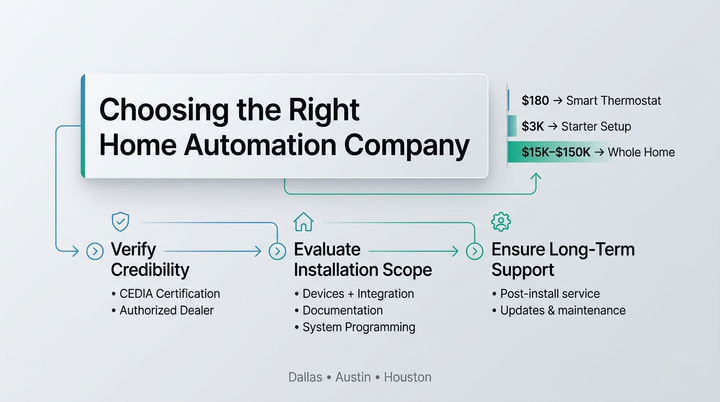
Look for CEDIA, HTA, or manufacturer-authorized credentials. These prove they follow industry best practices and safety standards.
A CEDIA-certified team in Dallas implemented lightning-safe grounding that passed inspection the first time, saving delays and insurance headaches.
Avoid “self-taught” teams without portfolio evidence.
10. Can You Provide Builder References or Case Studies?
References validate professionalism. Ask to speak directly with a past builder client, don’t just read testimonials.
One Texas builder discovered through a reference call that an integrator’s “5-star” claim hid constant schedule delays. That 10-minute call prevented a six-figure mistake.
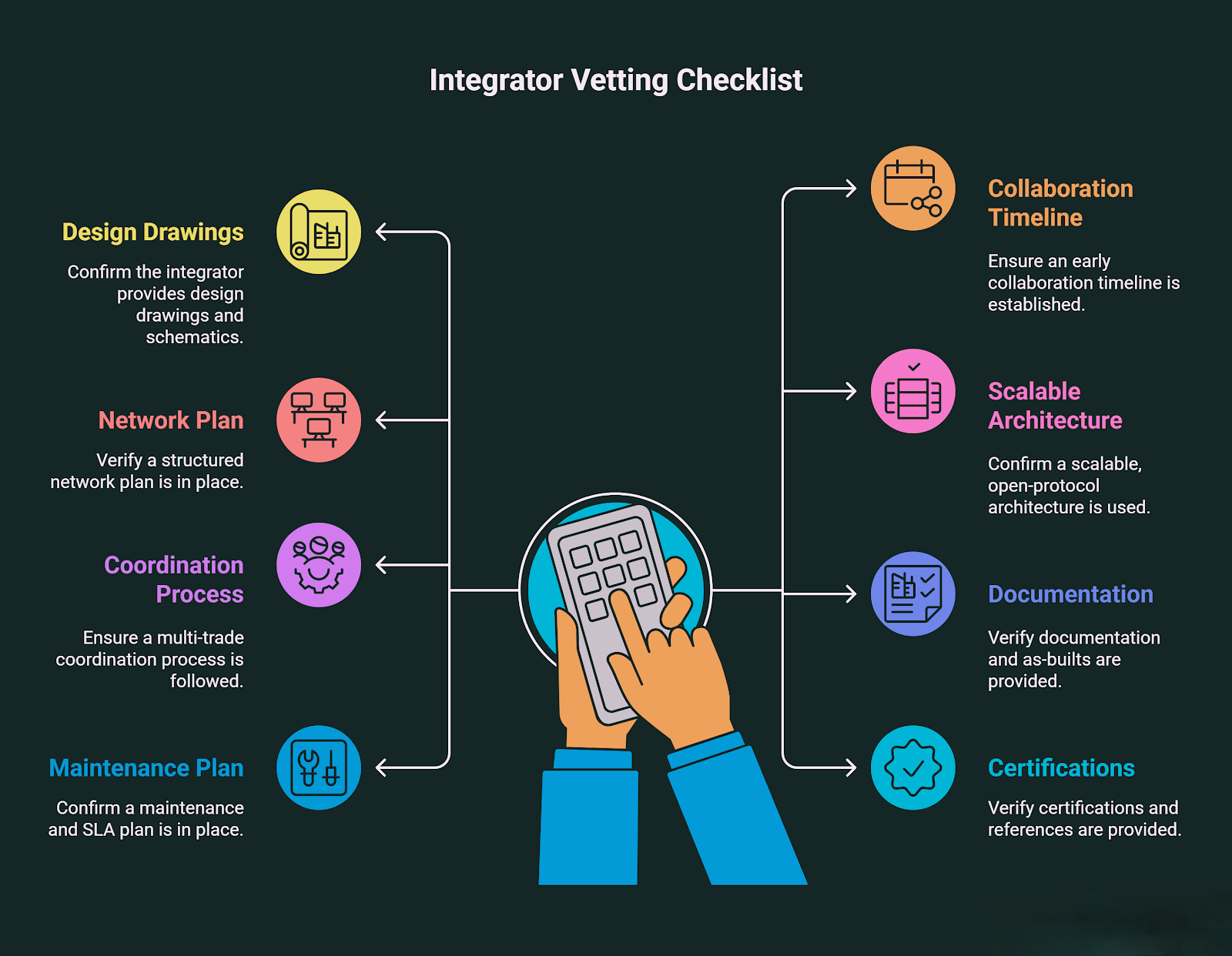
Builder’s Quick Vetting Checklist
Before signing, confirm your integrator provides:
- Design drawings & schematics
- Early collaboration timeline
- Structured network plan
- Scalable, open-protocol architecture
- Multi-trade coordination process
- Documentation & as-builts
- Maintenance & SLA plan
- Verified certifications & references
Frequently Asked Questions
Q1: What’s the biggest mistake builders make with smart home integration?
A: The biggest mistake is waiting until the walls are closed (post-drywall) to consult an integrator. This leads to compromised network performance, visible wires, and costly electrical rework.
Q2: Do smart home systems need a dedicated network?
A: Yes. A segmented, enterprise-grade network prevents latency and ensures that AV, HVAC, and security systems do not compete for bandwidth with the homeowner's personal devices.
Q3: Can a single system manage multiple units?
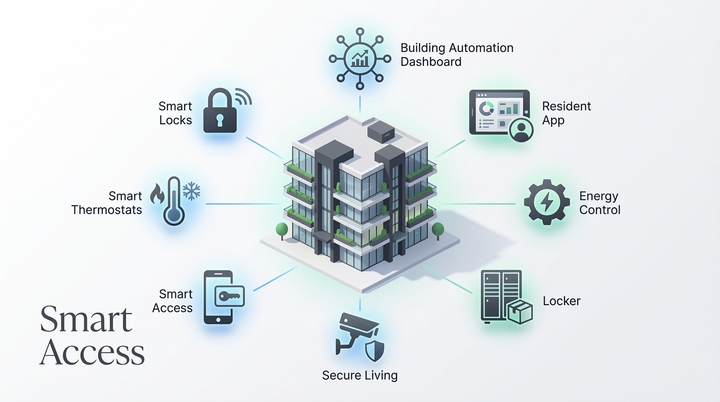
A: Absolutely. Platforms like SmartRent and Control4 Enterprise support portfolio-wide dashboards ideal for multifamily properties.
Q4: How long does installation take for new builds?
A: Basic pre-wire integration takes 1–3 days per unit; full-scale automation with security may extend to 2 weeks, depending on customization.
Q5: How do I ensure compatibility with future devices?
A: Choose systems certified for Matter, Z-Wave, or Wi-Fi 6. These standards ensure plug-and-play upgrades for the next decade.
Conclusion: Partner Early, Build Smarter
Smart home integration is no longer a finishing touch; it’s a structural layer of modern construction.
Builders who engage integrators early protect budgets, timelines, and reputations. Those who delay pay for drywall dust and overtime.
Partner with a certified team that values your blueprint as much as their tech. That’s how you future-proof your projects and your brand.
Schedule a strategy call with SEIITS to align your next build’s automation plan before the foundation is poured.
Comments ()